Healthy Lifestyle8 min read
High Cholesterol Diet: Indian Foods to Eat More Often and Foods to Limit
Learn how everyday food choices can support a heart-conscious eating pattern.
High Cholesterol Diet: Indian Foods to Eat More Often and Foods to Limit
High cholesterol is a common health concern that can increase the risk of cardiovascular diseases if left unmanaged. Cholesterol is a fatty substance that the body needs to produce hormones, build healthy cells, and support essential functions. However, when certain types of cholesterol become too high, they can contribute to the buildup of plaque in the arteries, increasing the risk of heart attacks and strokes over time.
The good news is that everyday food choices can play an important role in managing cholesterol levels. A balanced diet rich in vegetables, fruits, whole grains, legumes, nuts, seeds, and healthier sources of protein can support heart health. For people who enjoy Indian food, managing cholesterol does not necessarily mean giving up traditional meals. Instead, it involves making thoughtful changes to ingredients, cooking methods, portion sizes, and overall eating habits.
Understanding Cholesterol and Its Types
Cholesterol travels through the bloodstream in particles called lipoproteins. Two commonly discussed types are LDL and HDL cholesterol.
- LDL (Low-Density Lipoprotein): Often called “bad” cholesterol, elevated LDL can contribute to plaque buildup in the arteries.
- HDL (High-Density Lipoprotein): Often called “good” cholesterol, HDL helps transport cholesterol back to the liver for processing and removal.
Triglycerides are another type of fat in the blood that can also affect cardiovascular health, particularly when levels are elevated alongside other risk factors.
Diet can influence these levels, especially through the types of fats consumed, the amount of soluble fibre in meals, and overall dietary quality. However, genetics, age, physical activity, certain medical conditions, and medications can also influence cholesterol levels.
Indian Foods to Eat More Often for Better Heart Health
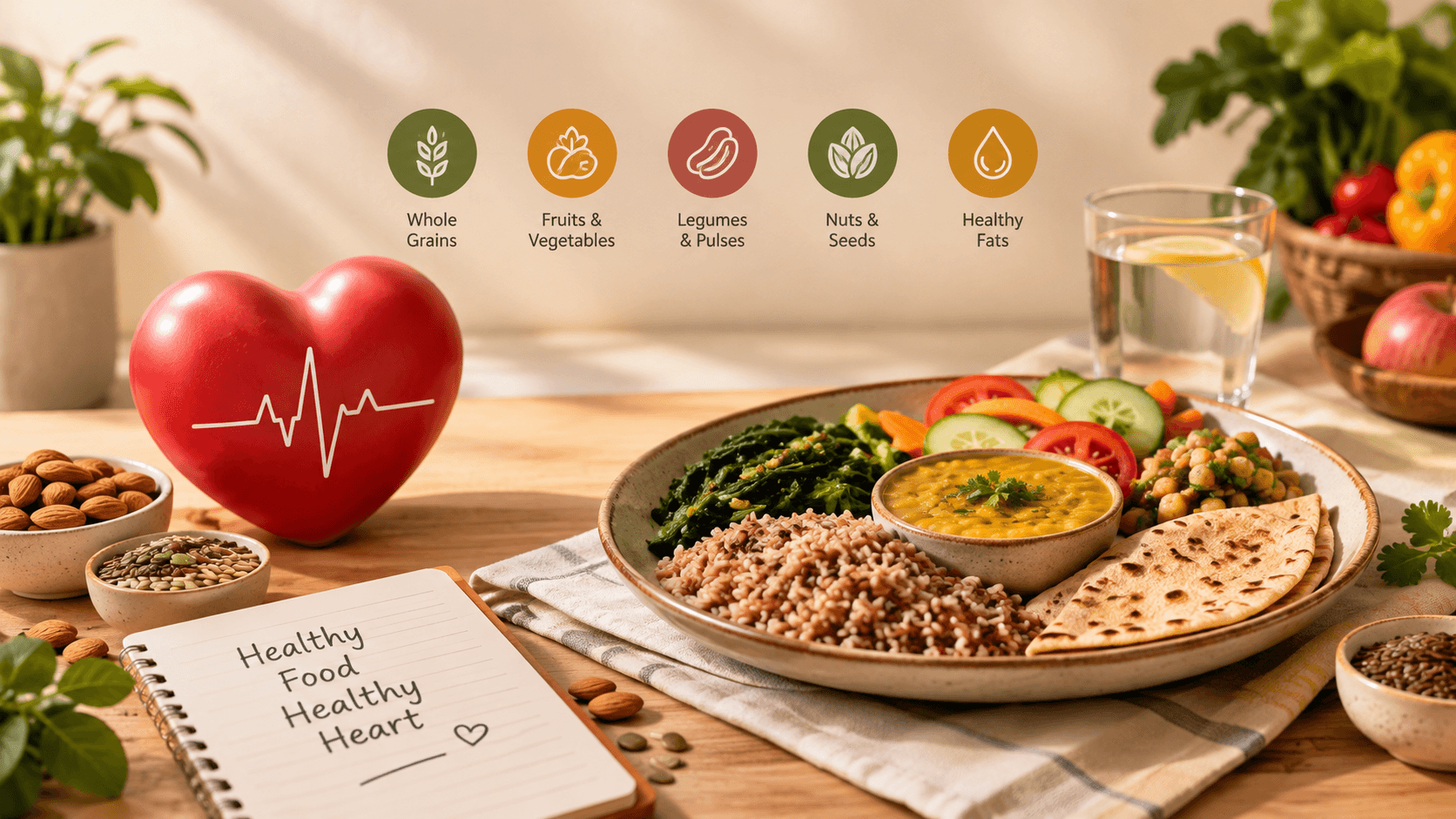
Indian cuisine offers a wide variety of nutritious ingredients that can fit into a heart-conscious eating pattern. The aim is to build meals that provide fibre, essential nutrients, healthy fats, and adequate protein.
1. Whole Grains and High-Fibre Foods
Whole grains provide fibre and other nutrients that support overall health. Soluble fibre, in particular, can help reduce LDL cholesterol by limiting the absorption of cholesterol in the digestive system.
Consider including:
- Oats and barley
- Whole-wheat roti
- Brown rice or other minimally processed grains
- Dalia (broken wheat)
- Millets such as jowar, bajra, and ragi
For example, replacing some refined-grain foods with oats, dalia, or whole-wheat roti can improve the fibre content of everyday meals. A bowl of vegetable oats or dalia with vegetables can make a nutritious breakfast, while whole-wheat roti paired with dal and sabzi can provide a balanced lunch.
2. Pulses, Beans, and Legumes
Dal, rajma, chana, lobia, and other legumes are valuable sources of plant protein and dietary fibre. Regularly including these foods can support a balanced diet and may help improve cholesterol levels, especially when they replace meals high in saturated fat.
Practical options include moong dal, masoor dal, chana masala, rajma, sprouts, and homemade bean salads. Prepare them with moderate amounts of oil and flavour them with herbs and spices rather than relying on heavy cream, butter, or excessive ghee.
3. Fresh Fruits and Vegetables
Fruits and vegetables supply vitamins, minerals, antioxidants, and fibre. Some fruits, including apples, pears, oranges, and guava, provide soluble fibre that can contribute to lowering LDL cholesterol as part of an overall healthy diet.
Try to include a variety of seasonal produce, such as:
- Apples, oranges, guava, pears, and papaya
- Spinach, methi, and other leafy greens
- Carrots, beans, cauliflower, and cabbage
- Tomatoes, cucumber, and other salad vegetables
Whole fruits are generally preferable to fruit juices because they retain more fibre and are often more filling. Adding vegetables to poha, upma, dal, khichdi, and everyday sabzi is a simple way to increase nutrient intake without completely changing familiar meals.
4. Nuts and Seeds
Nuts and seeds contain unsaturated fats, fibre, and other beneficial nutrients. When eaten in appropriate portions, they can be a useful addition to a heart-conscious diet.
Options include almonds, walnuts, flaxseeds, chia seeds, and sunflower seeds. A small handful of unsalted nuts or a spoonful of ground flaxseeds added to oats, curd, or a homemade breakfast bowl can provide variety and healthy fats.
Although nutritious, nuts and seeds are energy-dense, so portion sizes matter. Choose plain or lightly roasted varieties instead of heavily salted or sugar-coated options.
5. Healthier Sources of Protein
Protein is important for maintaining muscle, supporting body functions, and keeping meals satisfying. Choosing appropriate protein sources can also help reduce reliance on foods high in saturated fat.
Useful choices include dal, beans, chickpeas, tofu, and other soy foods. Unsweetened, lower-fat dairy products can also fit into a balanced diet. People who eat eggs, fish, or poultry can include them according to their nutritional needs and overall dietary pattern.
Fatty fish, where available and suitable, provides omega-3 fatty acids that can help lower triglyceride levels. However, omega-3 fats should not be considered a substitute for managing elevated LDL cholesterol.
6. Choose Cooking Oils and Fats Carefully
The type of fat consumed can influence LDL cholesterol. Replacing some saturated fats with unsaturated fats is generally a useful dietary strategy.
Common Indian cooking oils, including mustard, groundnut, sunflower, and olive oil, can be used appropriately as part of a balanced diet. No single oil is a complete solution, and the overall amount of oil used also matters.
Try to limit frequent use of butter, ghee, cream, and foods containing large amounts of coconut or palm oil, particularly when they contribute substantial saturated fat to the diet. This does not mean every traditional dish must be eliminated. Instead, consider reducing quantities and using cooking methods such as steaming, grilling, roasting, sautéing, or pressure cooking.
Foods to Limit When Managing High Cholesterol
Certain foods can make it harder to manage cholesterol levels when consumed frequently or in large amounts. The goal is to reduce overall intake rather than follow an unnecessarily restrictive diet.
1. Deep-Fried Foods
Samosas, pakoras, puris, bhaturas, chips, and other deep-fried snacks can contribute excess calories and fat, depending on their ingredients and preparation. Frequent consumption may also displace more nutritious foods.
Choose roasted chana, fruit, lightly roasted makhana, or homemade snacks prepared with less oil more often. When enjoying fried foods, consider smaller portions and avoid making them a daily habit.
2. Foods High in Saturated Fat
Butter, ghee, cream, fatty cuts of meat, and some full-fat dairy products can contribute significant saturated fat. A high intake of saturated fat may raise LDL cholesterol in many people.
You can still enjoy traditional Indian cooking while making adjustments. For example, prepare paneer dishes with less cream, use moderate amounts of cooking fat, and include more vegetable-based curries, dal, and bean dishes throughout the week.
3. Bakery Products and Packaged Snacks
Biscuits, cakes, pastries, cookies, and some packaged snacks may contain substantial amounts of saturated fat, added sugar, refined flour, or salt. Some products may also contain partially hydrogenated oils, which are a source of harmful trans fats.
Check nutrition labels when purchasing packaged foods. Compare saturated fat, trans fat, added sugar, and sodium content, and choose options with more fibre and fewer less-healthy fats where possible.
4. Sugary Drinks and Excess Refined Carbohydrates
Soft drinks, sweetened beverages, frequent desserts, and large portions of refined carbohydrates can contribute to excess calorie intake and may worsen triglyceride levels, particularly when combined with other risk factors.
White bread, refined-flour snacks, sweets, and sugary breakfast products are best consumed in moderation. Choose whole fruits, whole grains, and balanced meals more often, and keep added sugar intake in check.
5. Processed and Fatty Meats
Processed meats such as sausages, salami, and certain cured meat products can be high in saturated fat and sodium. Frequent consumption of fatty meats may also increase saturated fat intake.
Consider replacing some of these foods with dal, beans, soy products, fish, or lean poultry, depending on your dietary preferences. Plant-based protein sources are particularly useful because they can provide fibre as well as protein.
A Simple Indian Meal Plan for a Heart-Conscious Diet
A practical meal routine can make healthier choices easier to maintain. The following is an illustrative example, not a personalised medical diet.
Breakfast: Vegetable oats, dalia, or vegetable poha with a side of fruit.
Mid-morning snack: An apple, guava, orange, or another seasonal fruit.
Lunch: Whole-wheat roti or a moderate portion of brown rice, dal or beans, seasonal sabzi, and salad.
Evening snack: A small handful of unsalted nuts, roasted chana, or lightly roasted makhana.
Dinner: Vegetable khichdi with dal, or roti served with vegetables and a suitable protein source.
Drinks: Water, unsweetened tea, or other low-sugar beverages.
Portions should be adjusted to individual energy requirements, activity levels, preferences, and medical needs. People with diabetes, kidney disease, food allergies, or other health conditions may need additional dietary adjustments.
Lifestyle Habits That Support Healthy Cholesterol Levels
Food is an important part of cholesterol management, but it works best alongside other healthy habits.
- Stay physically active: Aim for regular movement, such as brisk walking, cycling, swimming, or other activities suited to your fitness level. Adults are generally advised to work towards at least 150 minutes of moderate-intensity aerobic activity each week, when medically appropriate.
- Maintain a healthy weight: If you have excess weight, gradual and sustainable weight management may help improve cholesterol and triglyceride levels.
- Avoid smoking: Smoking damages blood vessels and increases cardiovascular risk. Quitting can improve overall heart health.
- Limit alcohol: Alcohol can increase triglyceride levels in some people. Avoiding or limiting it may be advisable depending on your health and medical guidance.
- Prioritise sleep and consistency: Regular sleep and sustainable daily routines can support broader health goals.
- Monitor cholesterol levels: Periodic blood tests help you and your healthcare professional understand whether your approach is working.
Can Diet Alone Control High Cholesterol?
Dietary changes can make a meaningful difference, but their effects vary from person to person. Some people see improvements through changes in food choices, activity, and weight management, while others may continue to have elevated cholesterol because of genetics or underlying health conditions.
If your LDL cholesterol is significantly elevated, you have a history of cardiovascular disease, or you have other major risk factors, medication may be necessary alongside lifestyle changes. Do not stop or adjust prescribed cholesterol medication without consulting your healthcare professional.
A registered dietitian can help you create a realistic Indian meal plan based on your cholesterol report, food preferences, budget, and health requirements.
Conclusion
Managing high cholesterol does not require abandoning Indian food or following an extreme diet. Small, consistent changes can help create a more heart-conscious eating pattern. Include more whole grains, pulses, fruits, vegetables, nuts, and appropriate protein sources, while limiting frequent deep-fried foods, excess saturated fat, sugary products, and highly processed snacks.
Remember that cholesterol management is about the overall pattern of your diet and lifestyle, not a single food or ingredient. Combining balanced meals with regular physical activity, appropriate medical care, and routine cholesterol monitoring can support long-term cardiovascular health.
Download the application
- Cholesterol diet
- high cholesterol foods
- heart healthy diet
This article is for general education and is not medical advice. Please consult a qualified healthcare professional about your individual needs.