Healthy Lifestyle7 min read
Diet for Type 2 Diabetes: Building a Balanced Indian Plate
Learn the basic principles behind building balanced meals when managing type 2 diabetes.
Diet for Type 2 Diabetes: Building a Balanced Indian Plate
There is no single diabetes diet that suits everyone. A balanced eating pattern can help people with type 2 diabetes manage blood glucose levels, maintain a healthy weight, and support overall health. Everyday food choices, portion sizes, carbohydrate quality, protein, fibre, physical activity, medications, and individual blood-glucose responses can all influence diabetes management.
Indian meals offer a wide variety of nutritious foods, including whole grains, dals, beans, vegetables, fruits, dairy products, nuts, and seeds. Understanding how to combine these foods in appropriate portions can make it easier to build balanced meals without giving up familiar flavours or traditional dishes.
1. Understanding the Basics of a Diabetes-Friendly Diet
A diabetes-friendly diet focuses on balance, variety, and portion awareness rather than completely eliminating specific food groups. The goal is to choose nutritious foods, distribute carbohydrates thoughtfully throughout the day, and develop eating habits that are practical to maintain.
Regular meals with balanced portions of carbohydrates, protein, healthy fats, and fibre may help support more predictable blood-glucose responses. However, individual needs can vary depending on age, activity level, other health conditions, medication, and personal glucose patterns.
2. Build a Balanced Indian Plate
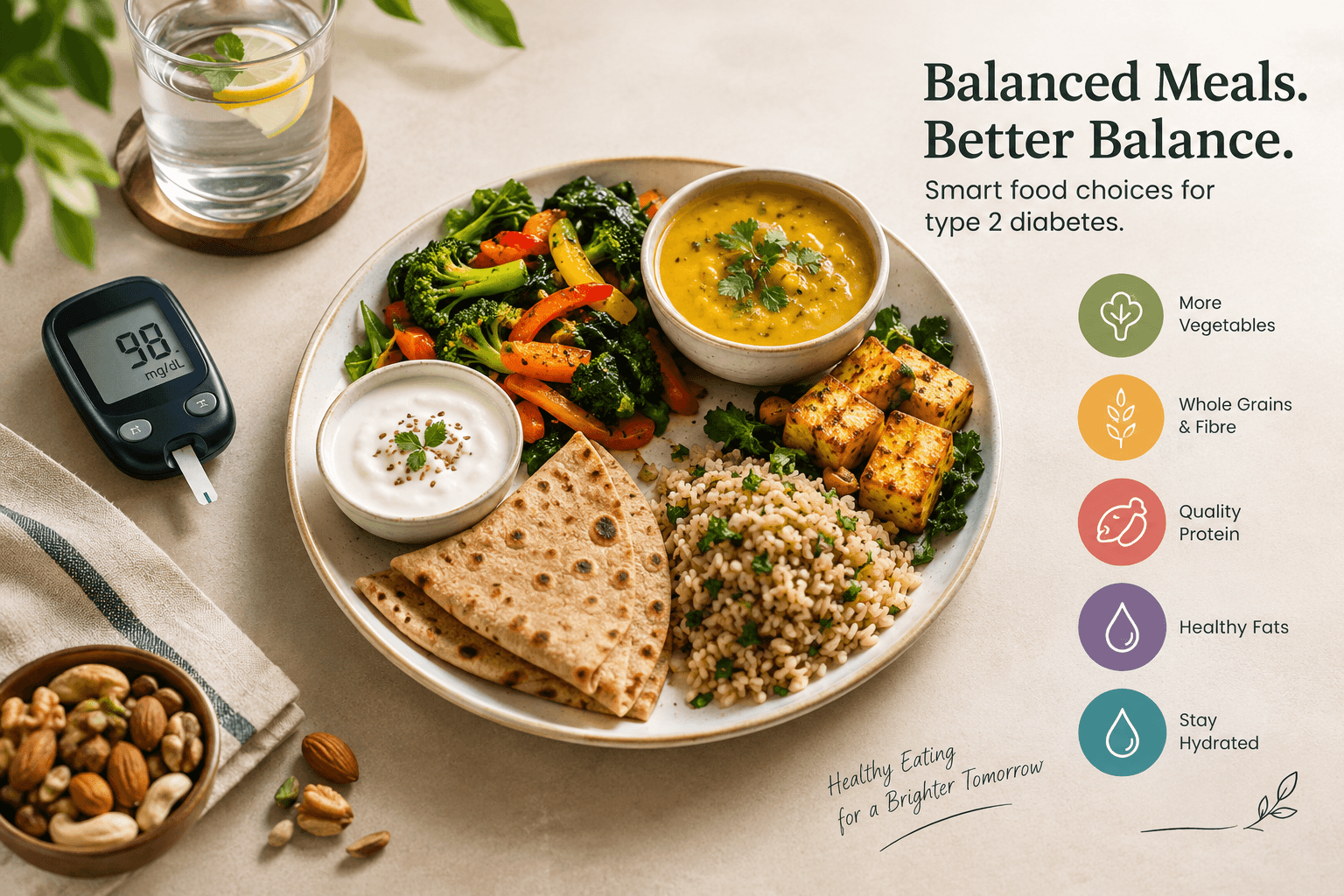
The plate method is a simple way to plan meals without calculating every nutrient. For many main meals, the plate can be divided into three sections:
- Half the plate: Non-starchy vegetables. Include vegetables such as bhindi, lauki, tori, cabbage, cauliflower, beans, capsicum, spinach, and other leafy greens. These provide fibre, vitamins, minerals, and variety.
- One-quarter of the plate: Protein-rich foods. Choose dals, rajma, chana, beans, tofu, paneer, eggs, fish, or lean chicken, depending on your dietary preferences.
- One-quarter of the plate: Carbohydrate-rich foods. Options include roti, whole-wheat chapati, brown rice, millets, or other grains in suitable portions.
Curd or plain yoghurt can also be included where appropriate. Portion sizes may need adjustment according to individual requirements, medications, activity, and blood-glucose responses.
3. Choose Carbohydrates Carefully
Carbohydrates have a direct effect on blood glucose because they are broken down into glucose during digestion. However, carbohydrates are not all the same, and their overall quality, quantity, and combination with other foods can influence the body's response.
Useful carbohydrate sources include whole-wheat roti, oats, dal, beans, chickpeas, and minimally processed whole grains. Whole fruits can also fit into a balanced eating pattern.
Try to be mindful of large portions of white rice, refined flour products, biscuits, sweets, sugary cereals, and other foods made with refined carbohydrates. These foods do not necessarily need to be completely forbidden, but their frequency and portion sizes matter.
Choosing higher-fibre carbohydrate sources and combining them with vegetables and protein can help make meals more balanced. People who monitor their blood glucose can discuss their readings with their healthcare team to understand how different meals affect them.
4. Include Enough Protein
Protein supports muscle maintenance, tissue repair, and overall nutritional health. Including protein in meals can also contribute to fullness and make a balanced eating pattern easier to maintain.
Indian diets offer several protein-rich options, such as moong dal, masoor dal, chana, rajma, soybeans, tofu, paneer, curd, eggs, fish, and lean poultry.
For example, a meal of roti, vegetable sabzi, and dal provides a combination of carbohydrates, fibre, and protein. Adding plain curd or another suitable protein source may improve the overall balance of the meal.
People with diabetes who also have kidney disease may require individualised protein recommendations. They should consult a qualified healthcare professional before making major changes to protein intake.
5. Increase Fibre Through Everyday Foods
Fibre is an important part of a balanced diet. It supports digestive health and can help slow the absorption of carbohydrates, depending on the food and the overall composition of the meal.
Good sources of fibre include vegetables, whole fruits, legumes, beans, oats, whole grains, nuts, and seeds.
Simple ways to increase fibre include adding vegetables to lunch and dinner, including dal or beans regularly, choosing whole fruit instead of fruit juice, and replacing some refined grains with whole-grain alternatives.
Increase fibre gradually and drink adequate water, unless a healthcare professional has advised fluid restriction. A varied diet is generally more beneficial than relying on a single food marketed as a solution for blood sugar.
6. Pay Attention to Portion Sizes
Even nutritious foods can affect blood glucose when eaten in large quantities. Portion awareness is particularly important for carbohydrate-rich foods such as rice, roti, potatoes, poha, upma, and other grain-based dishes.
Instead of automatically removing rice or roti from meals, consider the amount you eat and balance it with vegetables and protein. For example, a meal with a suitable portion of rice, dal, vegetable sabzi, and salad may offer a more balanced combination than a large serving of rice eaten alone.
Eating slowly, noticing hunger and fullness cues, and maintaining reasonably consistent meal patterns may also help with meal planning. The appropriate portions depend on individual nutritional needs and treatment plans.
7. Limit Sugary Drinks and Be Mindful of Added Sugar
Sugary beverages can deliver substantial amounts of carbohydrates without providing much fibre or fullness. Regular consumption of sweetened tea, packaged fruit drinks, soft drinks, energy drinks, and sugar-sweetened beverages may make blood-glucose management more difficult.
Plain water is a useful everyday choice. Unsweetened tea, coffee, or other suitable beverages may also fit into an individual's eating pattern.
Added sugar in sweets, desserts, sweetened yoghurt, and packaged snacks is worth monitoring. People do not necessarily need to eliminate every food they enjoy, but understanding ingredients, serving sizes, and frequency can help them make informed choices.
8. Choose Healthy Fats in Appropriate Amounts
Fats are an essential part of nutrition, but the type and quantity matter. Unsaturated fats from nuts, seeds, and suitable vegetable oils can be included in a balanced diet.
Indian cooking can use oils such as mustard, groundnut, or other suitable vegetable oils in moderate amounts. Nuts and seeds can provide additional nutrients, although their portions should also be considered.
Try to limit frequent consumption of foods high in trans fats and excessive saturated fats, including certain deep-fried snacks, bakery products, and heavily processed foods. Steaming, grilling, roasting, and using moderate amounts of oil can be practical alternatives to frequent deep-frying.
9. Plan Familiar Indian Meals Thoughtfully
Managing type 2 diabetes does not mean giving up traditional Indian food. Many familiar dishes can be included by adjusting portions, ingredients, preparation methods, and meal combinations.
Examples of balanced meal combinations include:
- Breakfast: Vegetable oats with curd, or besan chilla with vegetables.
- Lunch: Roti, dal, seasonal sabzi, and salad.
- Dinner: A suitable portion of rice or roti with vegetables and a protein source such as dal, tofu, fish, or chicken.
- Snacks: A small portion of nuts, roasted chana, plain curd, or whole fruit.
These are general examples rather than a personalised meal plan. The best choices and portions depend on food preferences, nutritional requirements, medication, activity levels, and individual blood-glucose responses.
10. Consider Meal Timing, Physical Activity, and Medication
Meal timing can be important for people managing diabetes, especially those using insulin or medicines that can cause low blood glucose. Consistent meal patterns may help some people manage their treatment safely.
Regular physical activity, adequate sleep, and taking prescribed medication as directed are also important parts of diabetes management. A balanced diet works best as part of an overall care plan rather than as a replacement for medical treatment.
People should not stop, reduce, or adjust diabetes medication on their own because they have changed their diet. Significant dietary changes, skipped meals, or fasting should be discussed with a healthcare professional, particularly when medications can cause hypoglycaemia.
11. Monitor Your Individual Response to Food
Different people can respond differently to the same meal. Blood-glucose monitoring, when recommended by a healthcare professional, can help identify patterns and show how portion sizes, meal combinations, activity, and timing affect glucose levels.
Keeping a simple food and glucose record may help you discuss practical adjustments with your doctor or registered dietitian. Instead of labelling individual foods as universally good or bad, focus on the overall eating pattern and the response observed over time.
Conclusion
A balanced Indian diet for type 2 diabetes does not need to be complicated or restrictive. Building meals around vegetables, appropriate portions of carbohydrate-rich foods, protein sources, fibre-rich ingredients, and healthy fats can support a more structured approach to nutrition.
Small, sustainable changes—such as adjusting rice and roti portions, adding more vegetables, including protein in meals, choosing whole fruit, and limiting sugary drinks—can help establish healthier eating habits. Individual needs vary, so working with a qualified healthcare professional or registered dietitian can help ensure that dietary choices complement medication, glucose monitoring, and overall health goals.
Download the application now
- Diabetes diet
- Indian diabetes diet
- blood sugar diet
This article is for general education and is not medical advice. Please consult a qualified healthcare professional about your individual needs.