Healthy Lifestyle8 min read
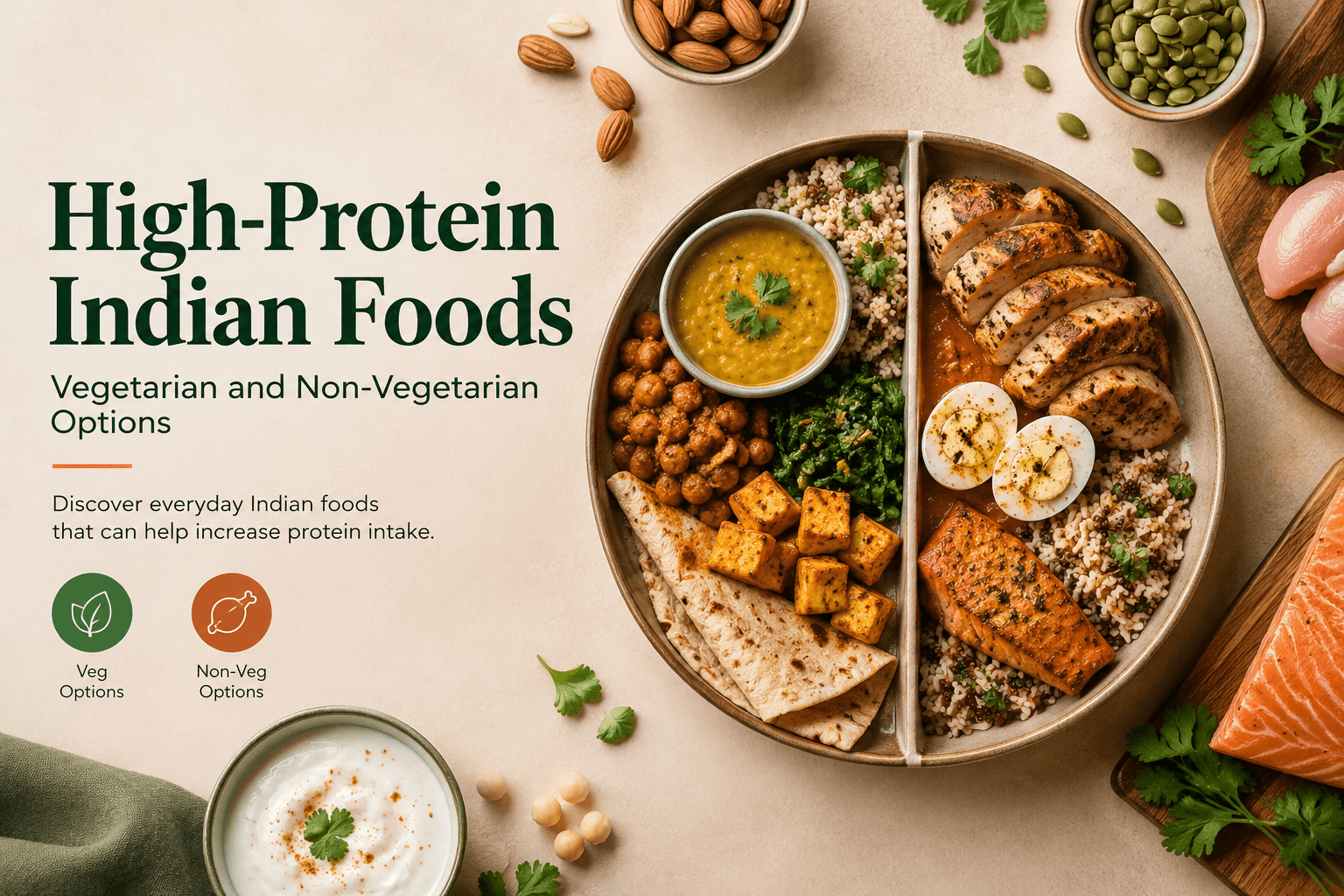
High-Protein Indian Foods: Vegetarian and Non-Vegetarian Options
Discover everyday Indian foods that can help increase protein intake.
High-Protein Indian Foods: Vegetarian and Non-Vegetarian Options
Understanding the Importance of Protein
Protein is an essential nutrient that supports normal muscle maintenance, tissue repair, recovery, and many other important functions in the body. It also helps make meals more satisfying, which may support appetite management and overall dietary balance.
Indian cuisine offers a wide variety of protein-rich foods, from traditional dals and legumes to dairy products, soy-based foods, eggs, fish, and chicken. Whether you follow a vegetarian diet or include non-vegetarian foods, you can build balanced meals using familiar ingredients available in most Indian households.
Instead of relying on a single “superfood” or protein supplement, focus on including appropriate protein sources throughout the day. Combining protein-rich foods with vegetables, whole grains, fruits, and healthy fats can help create meals that are nutritious, satisfying, and practical for everyday life.
Best Vegetarian Protein Sources in Indian Diets
Vegetarian diets can provide protein through pulses, legumes, dairy products, soy foods, nuts, and seeds. Choosing a variety of these foods throughout the day can help improve overall protein intake.
1. Dal and Lentils
Dal is a staple in many Indian households and an affordable way to include plant-based protein in everyday meals. Moong dal, masoor dal, toor dal, and urad dal can be prepared as curries, soups, khichdi, or traditional lentil dishes.
Pairing dal with rice, roti, or other grains adds variety to the meal and helps provide a broader range of essential amino acids across the diet.
Easy meal ideas: Dal with rice, moong dal chilla, masoor dal soup, or vegetable dal khichdi.
2. Chickpeas, Rajma, and Other Beans
Chickpeas, kidney beans, black chana, and other legumes are useful sources of plant protein. They also provide dietary fibre and other nutrients that contribute to a balanced diet.
These ingredients can be included in traditional Indian curries, salads, wraps, and one-pot meals. Soaking dried legumes and cooking them thoroughly can improve their texture and make them easier to incorporate into meals.
Easy meal ideas: Rajma with rice, chole with roti, kala chana salad, or chickpea wraps with vegetables.
3. Paneer and Milk Products
Paneer, milk, curd, and Greek-style or high-protein yoghurt can contribute to daily protein intake. Paneer is particularly versatile because it can be added to curries, grilled dishes, wraps, and vegetable preparations.
Curd and yoghurt can also be convenient additions to breakfast, snacks, or lunch. Choose portions and varieties based on your nutritional needs, taste preferences, and overall diet.
Easy meal ideas: Paneer bhurji with roti, grilled paneer tikka, curd with roasted chana, or yoghurt with nuts and seeds.
4. Soybeans, Tofu, and Soya Chunks
Soy-based foods are valuable options for people looking to increase plant-based protein intake. Soya chunks are convenient for Indian curries and pulao, while tofu can be used in stir-fries, bhurji, and wraps.
Soy foods are particularly useful for vegetarians who want more variety beyond dal and dairy products.
Easy meal ideas: Soya chunk curry, tofu bhurji, tofu and vegetable stir-fry, or soya pulao.
5. Nuts and Seeds
Peanuts, almonds, pumpkin seeds, sesame seeds, and other nuts and seeds contribute some protein along with healthy fats and minerals. They are convenient additions to snacks, breakfast bowls, chutneys, and salads.
However, nuts and seeds are generally more energy-dense than many other protein sources. They work well as part of a balanced diet but may not be the most practical primary protein source for every meal.
Easy meal ideas: Roasted peanuts, a small portion of mixed nuts, seed-topped curd, or peanut chutney with a meal.
Best Non-Vegetarian Protein Sources
For people who eat eggs, fish, chicken, or other animal-based foods, these ingredients can make it easier to include protein in regular meals.
1. Eggs
Eggs are a versatile source of high-quality protein and can be prepared in several ways. They fit easily into breakfast, lunch, or dinner and can be combined with vegetables and whole grains.
Easy meal ideas: Boiled eggs, vegetable omelettes, egg bhurji with roti, or egg curry with rice.
2. Chicken
Chicken is a popular protein source that can be included in a wide range of Indian meals. Grilled, roasted, baked, or lightly cooked chicken dishes can provide protein without relying on heavy sauces or excessive added fats.
The preparation method matters: deep-fried chicken and rich, creamy gravies may contain considerably more calories than simpler preparations.
Easy meal ideas: Grilled chicken with vegetables, homemade chicken curry, chicken wraps, or chicken with roti and salad.
3. Fish and Seafood
Fish provides protein, and some varieties also supply omega-3 fatty acids. Options such as rohu, pomfret, sardines, and other locally available fish can be included according to personal preference and availability.
Steaming, grilling, baking, or preparing fish in a balanced curry can help keep meals varied. Choose preparation methods and portion sizes that suit your overall dietary requirements.
Easy meal ideas: Fish curry with rice, grilled fish with vegetables, or a fish meal served with roti and salad.
4. Prawns and Other Seafood
Prawns and certain other seafood options can contribute substantial protein. They can be prepared with Indian spices, vegetables, and moderate amounts of oil for a flavourful meal.
Easy meal ideas: Prawn curry, lightly sautéed prawns with vegetables, or prawn masala served with rice.
Vegetarian vs Non-Vegetarian Protein: Which Is Better?
Both vegetarian and non-vegetarian diets can support adequate protein intake. The best choice depends on your dietary preferences, nutritional requirements, food availability, budget, and overall eating pattern.
Many animal-based protein foods provide all nine essential amino acids in useful proportions. Plant-based foods also contribute essential amino acids, and eating a varied diet with legumes, grains, soy, nuts, and seeds can help meet protein needs.
Vegetarian diets may require more attention to food variety and meal planning, especially when dairy and soy are limited. Non-vegetarian diets can offer convenient protein sources, but they should also include vegetables, fruits, whole grains, and other nutrient-rich foods.
Rather than labelling one diet as universally superior, focus on the quality, variety, and balance of the foods you eat.
How to Include More Protein in Everyday Indian Meals
Increasing protein intake does not necessarily require expensive products or major changes to your routine. Small, consistent adjustments can make everyday meals more balanced.
- Breakfast: Include moong dal chilla, besan chilla, eggs, paneer bhurji, or curd.
- Lunch: Add dal, rajma, chole, paneer, chicken, or fish to your regular meal.
- Evening snack: Choose roasted chana, yoghurt, boiled eggs, or a suitable portion of nuts.
- Dinner: Include tofu, soya chunks, dal, paneer, eggs, chicken, or fish alongside vegetables and grains.
- Meal preparation: Cook a batch of dal, boil eggs, prepare chickpeas, or portion paneer and tofu in advance to make balanced meals easier on busy days.
Try to include a meaningful protein source at each main meal instead of depending on dinner alone to meet your daily needs.
How Much Protein Do You Need?
Protein requirements vary according to body weight, age, activity level, health status, and personal goals. People who exercise regularly or are working towards particular fitness goals may have different requirements from those with lower activity levels.
For many healthy adults, approximately 0.8 grams of protein per kilogram of body weight per day is a commonly used baseline reference. Individual needs can be higher depending on circumstances, and people with certain medical conditions may require personalised guidance.
For example, a healthy adult weighing 60 kg would have a baseline reference of around 48 grams of protein per day using this calculation. This is an illustrative estimate, not a personalised prescription.
You can estimate your intake by considering the protein in your usual portions of dal, dairy, eggs, legumes, soy, fish, or chicken. Remember that portion sizes and preparation methods affect the amount you consume.
If you have kidney disease or another condition requiring dietary management, consult a qualified healthcare professional before making substantial changes to your protein intake.
Common Mistakes to Avoid When Increasing Protein
A protein-focused diet should still be balanced. Avoiding a few common mistakes can make your approach more sustainable.
- Relying on only one food: Eating only eggs, paneer, or protein shakes can reduce dietary variety. Include different protein sources throughout the week.
- Ignoring portion sizes: A food may be protein-rich, but the amount consumed determines how much protein it contributes.
- Overlooking overall nutrition: Protein intake does not replace the need for vegetables, fruits, fibre, healthy fats, and other essential nutrients.
- Choosing every food based on protein alone: Consider sodium, added sugar, cooking oil, saturated fat, and overall meal quality as well.
- Assuming supplements are essential: Many people can meet their protein needs through regular foods. Supplements may be useful in certain situations, but they are not automatically necessary.
- Making sudden, restrictive changes: Gradually adding suitable protein sources is often easier to maintain than completely changing your eating habits.
Build a Balanced Indian Plate
A balanced meal can include a protein source, vegetables, a suitable portion of whole grains or other carbohydrate-rich foods, and some healthy fat.
For example, a vegetarian lunch might include dal, roti, seasonal vegetables, and curd. A non-vegetarian option could include grilled chicken or fish, rice or roti, and a generous serving of vegetables.
These combinations provide more than protein alone. They also contribute energy, fibre, vitamins, minerals, and other nutrients needed for a varied diet.
Your ideal plate will depend on your appetite, activity level, health needs, and goals. There is no single combination that works for everyone.
Final Thoughts
High-protein Indian foods can fit naturally into both vegetarian and non-vegetarian diets. Dal, beans, paneer, curd, tofu, soya chunks, eggs, fish, and chicken offer practical choices for building balanced meals with familiar ingredients.
The key is to focus on variety, suitable portions, and consistency rather than searching for one perfect protein food. By planning meals ahead, including protein sources throughout the day, and paying attention to your overall diet, you can develop eating habits that support your nutritional needs over time.
With PayByCal, you can make your daily food choices easier to review by tracking meals and observing your eating patterns. Consistent tracking can help you identify opportunities to improve variety and build a routine that works for your lifestyle.
Visit the link for more details
Download the application now
- High protein foods
- Indian protein foods
- vegetarian protein
This article is for general education and is not medical advice. Please consult a qualified healthcare professional about your individual needs.